
por Raúl | 30 de julho de 2026 | Inglês intermediário superior B2
A voz passiva nos ajuda a focar na ação ou no destinatário da ação, em vez de na pessoa ou coisa que a realiza. Nós a usamos quando o ‘autor’ de uma ação é desconhecido, irrelevante ou óbvio, ou quando queremos que o objeto do verbo seja o principal...
por Raúl | 30 de julho de 2026 | Inglês intermediário superior B2
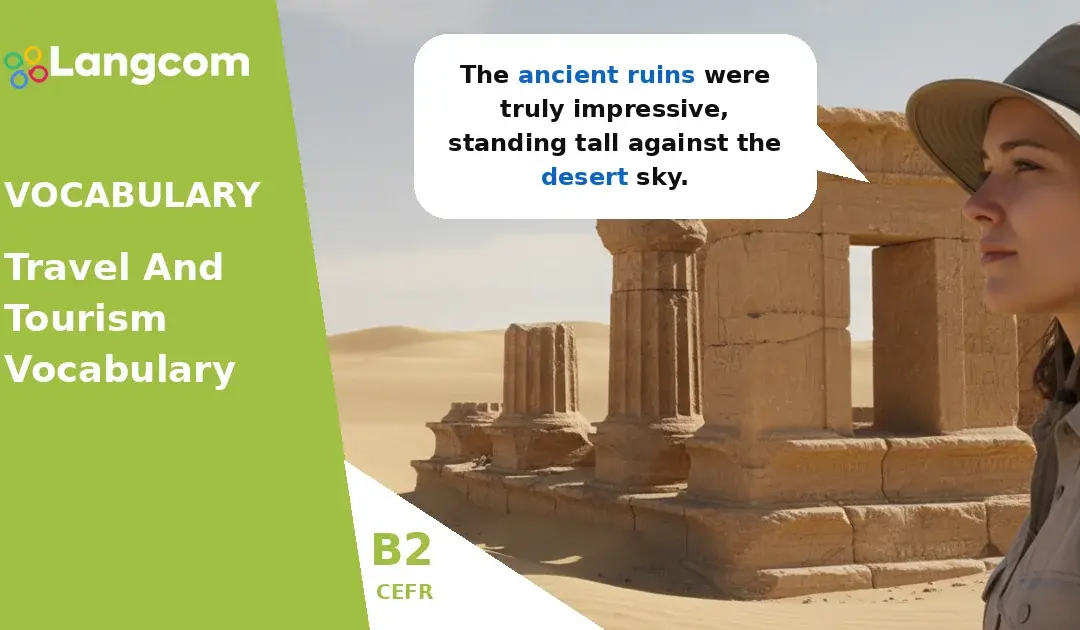
To describe travel experiences vividly in English, use strong B2 adjectives like breathtaking, stunning, and superb. These powerful words help you express how truly amazing a place or experience is, going beyond simple adjectives like ‘nice’ or...
por Raúl | 30 de julho de 2026 | Inglês intermediário superior B2
Gerunds (-ing forms) and infinitives (to + base verb) are essential verb forms that function differently in English sentences, acting as nouns, adjectives, or adverbs. A gerund acts like a noun, describing an activity or concept, as in Swimming is good exercise. It...

por Raúl | 30 de julho de 2026 | Inglês intermediário superior B2
Tone groups are essential units of spoken English that help listeners understand your meaning and make your speech sound natural. A tone group is a segment of speech, often a phrase or clause, that has one main stressed syllable (the nucleus) and a specific intonation...

por Raúl | 30 de julho de 2026 | Inglês intermediário B1
The Present Simple describes habits, routines, and general truths, while the Present Continuous describes actions happening right now or temporary situations. Use the Present Simple for things that happen regularly, like I wake up early every day. It also states...
por Raúl | 30 de julho de 2026 | Inglês intermediário B1
Adverbs are words that give more information about verbs, adjectives, or other adverbs. They tell us *how*, *when*, *where*, or *to what extent* something happens. For B1 English learners, understanding common adverbs of degree (intensifiers) and adverbs of frequency...
