

How Do We Form Yes/No Questions with ‘Be’?
Yes/No questions are simple. They ask for a ‘yes’ or ‘no’ answer.
- Start with Am, Is, or Are.
- Then add the subject (who or what).
- Finish with the rest of the sentence.
- Example: Are you happy?
🎓 Learn English with the Blended method
Small groups · 24/7 AI Tutor · Cambridge preparation
Plans from $39 $79 per month
What Are Short Answers to ‘Be’ Questions?
When someone asks a Yes/No question with be, we often use short answers.
- They are positive (e.g., Yes, I am) or negative (e.g., No, I’m not).
- Remember to use the correct form of be for the subject.
- Important: Do not use contractions in positive short answers. For example, say Yes, I am, not Yes, I’m.
How Do We Form Wh-Questions with ‘Be’?
Wh-questions ask for specific information, not just ‘yes’ or ‘no’.
- Start with a question word: What, Where, Who, When, Why, How.
- Then add am, is, or are.
- Finally, add the subject and the rest of the sentence.
- Example: Where are you from?
| Verb Be | Subject | Rest of Sentence? | Positive Short Answer | Negative Short Answer |
|---|---|---|---|---|
| Am | I | ready? | Yes, you are. | No, you aren’t. |
| Is | he/she/it | cold? | Yes, he/she/it is. | No, he/she/it isn’t. |
| Are | you | a teacher? | Yes, I am. | No, I’m not. |
| Are | we/they | here? | Yes, we/they are. | No, we/they aren’t. |
Examples
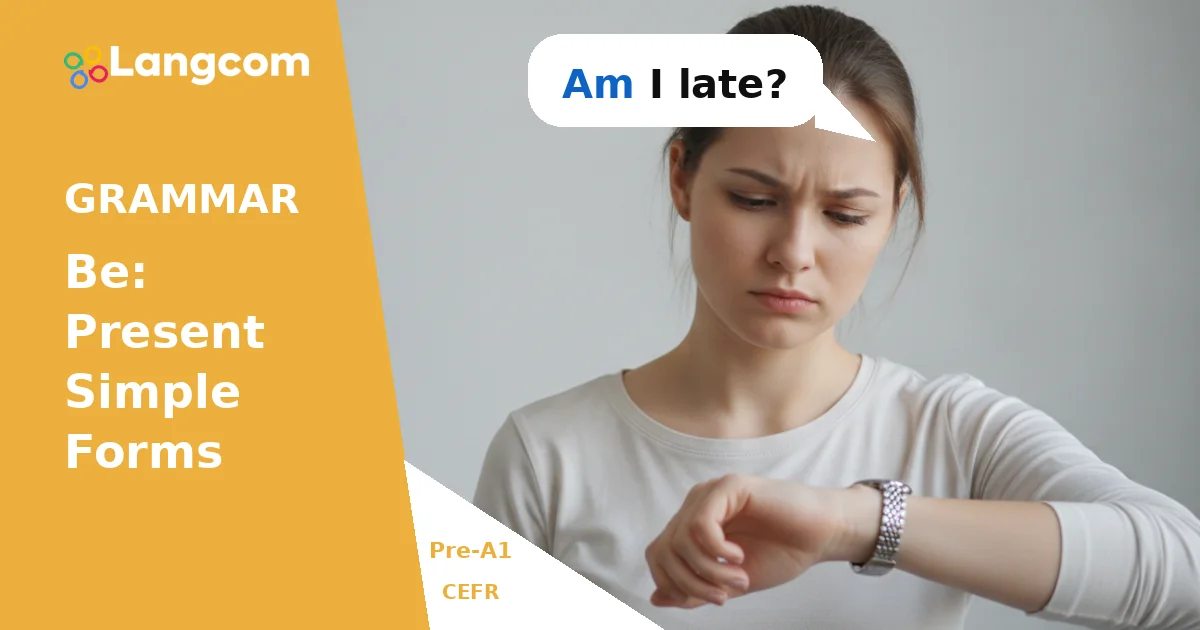
- Am I late?
- Is she a student?
- Are they friends?
- What is your name?
- Where are you from?
- How old is he?
- Who is that?
Practice
💬 Need personalized guidance?
As an Authorized Cambridge Preparation Centre, we can guide you to the right course and certification. Chat with our advisors today.
Chat with an Advisor on WhatsAppCommon mistakes for Spanish speakers
Spanish speakers sometimes put the subject before the verb in questions, like in Spanish. This is incorrect in English.
- Incorrect: You are happy?
- Correct: Are you happy?
Another common mistake is forgetting to use the verb to be when asking about age. This is often a direct translation from Spanish.
- Incorrect: How old you have?
- Correct: How old are you?
Also, remember not to use contractions in positive short answers.
- Incorrect: Yes, I’m.
- Correct: Yes, I am.
Frequently asked questions
What is the basic rule for ‘be’ questions?
The basic rule is to put the verb be (am, is, are) before the subject. For example, Is he happy?
Can I use contractions in ‘be’ questions?
Yes, you can use contractions in negative questions, like Isn’t she here? or Aren’t you ready? However, we usually do not contract am not in questions.
How do I answer a Yes/No question with ‘be’?
Use short answers. For example, if someone asks Are you a student?, you can say Yes, I am or No, I’m not. Remember, no contractions in positive short answers.
What are some common question words with ‘be’?
Common question words include What (for things), Where (for places), Who (for people), When (for time), and How (for manner or age).

0 Comments